Military Threats to Breiamhbéo
To: Emperor Tharenach
From: Magistress of Spies Llandeerah
Regarding Military threats to Breiamhbéo; Report 64,051
Your Glorious Majesty,
As you may remember, a few months ago, you tasked your spies to find out anything and everything we could about the rise of a new power in Central Taogh. Please forgive the delay. Finding reliable sources in the West after the fall of what remained of Gathran has been difficult (see Report 62,000b).
But, as always, we rose to the challenge.
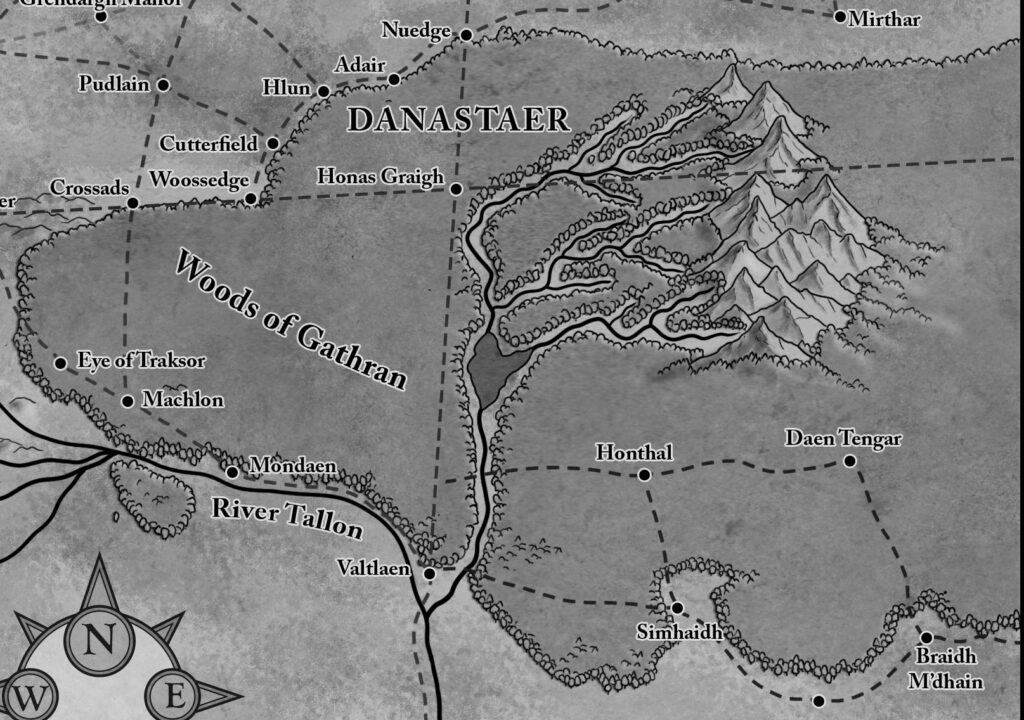
As stated in Report 62,000b the war between the Phoenix Wizards which began in 1383 K.C. came to an end in 1386 K.C. By that time, however, there was very little structure left to Gathran’s military. As you may recall, your mother, the illustrious Empress Breianntha, tried and failed to rebuild the Empire in Taogh, her army being stopped by Gathran’s Leghans. While this was a setback for our imperial ambitions to the west, Gathran lost what little influence remained. Since then, no standing, professional army has been sighted on the western continent.
As you well know, maintaining an army is expensive, and while we have retained the basic structures inherited from Gathran, namely Leghan, Codhan and Canthan, none of them retain any similarity to the heavy infantries once sent forth from Honas Graigh.
As far as our spies were able to ascertain, no professional army remains on Taogh. That does not, however, mean there aren’t any military forces resembling our army’s state of readiness. These mercenary armies hire themselves out to local rulers or potentates when the campaign season comes, and even outside that time of year, they sell their services to anyone who can afford them, playing the parts of law-enforcement for those nobles who cannot afford standing armies.
You see, even though Gathran has been falling for millennia, her provinces retained a semblance of civilization, at least for a generation or two, until the Contraction went beyond a tribe’s sphere of influence at which point those who had never experienced Imperial glory fell back towards barbarism. Cities were abandoned or repurposed, or simply became places to dismantle for their stones. Not even temples were spared.
As peoples stopped viewing themselves as part of whole, their societies changed, as did their militaries. Then again, it must be pointed out that the humans of Taogh had never even been part of the Empire and as such had never benefited from or experienced the highly structured might of the Leghans.
On the other hand, we have potential threats to the east. This has forced us to not only divide our analysis into two parts: Taogh and Comhara, but also into human and elven threats. There are realms, like Kalduuhn, who have integrated humanity into their armed forces, even though, as you shall see, such militaries don’t pose much of a threat either. They are, however, still a different kind of animal than the warbands attached to various tribes or houses.
Humans of Taogh
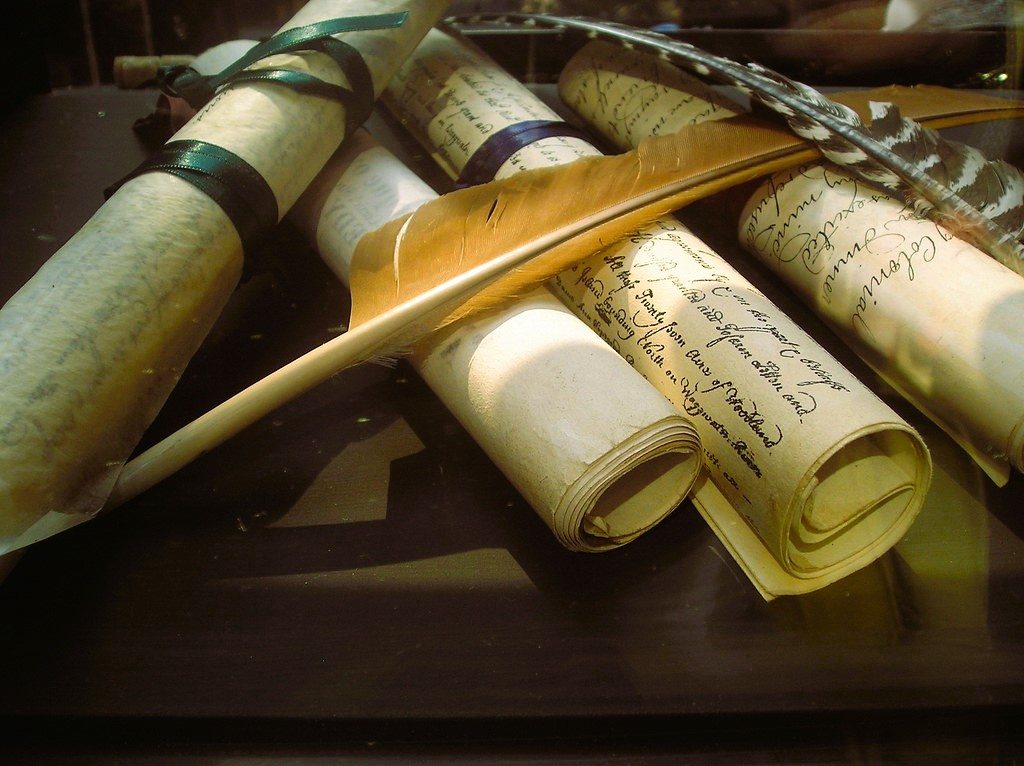
In a way, human warbands are reminiscent of our distant past. This is particularly interesting for historians who want a glimpse into how things were before the Empire of Gathran. As it stands, we know little of that time – parchment eventually crumbles, and if nobody bothers to copy ancient scrolls, recorded history literally fades.
Tribes, noble houses, cities, realms, and their military organisations are frighteningly similar. In a tribe, the chief equips people loyal to him or her and leads them in raids or battles against other tribes. These warbands or raiding parties are about as disciplined as a pack of dogs. When the raiding season is over, this group disbands only to be gathered anew when need arises.
Noble houses are something like these tribes: The head of a house has loyal followers and villeins from which he drafts a warband. Followers owe the house their positions, wealth, status, and as such assemble their own bands to heed their lord’s or lady’s call. Initially, villeins as a concept only appeared in what is now Chanastardh, but word spread and the mighty in other human places applied the term to those who were little more than slaves. They farmed for the lord, and they fought and died for the lord. But where the tribes follow their chief out of familial obligations, these villeins follow because they have no choice.
Cities rarely field armies or warbands, unless it is for defense. Places like Dunthiochagh, with cities that grew courtesy of elven influence, have a standing quasi-military force: the Watch. Their duty is to assist Lliania’s judges in keeping the peace and maintaining the city’s safety. There might well be individual houses who maintain their own, meager bands of guards, but they have no authority beyond their lord’s or lady’s sphere of influence. The exception is the ruler of a city. House Duasonh has been ruling over Dunthiochagh for centuries, and as such maintains a guard force that is larger than those of other houses.
Things are different in other parts of the continent. The peoples of Chanastardh developed their own systems well outside Gathran’s influence (please refer to the book on Chanastardh for details). In war-torn places, like Haldain, the nobles’ need for maintaining armies in order to defend their dominions result in widespread plundering of the opposition – with allegiances switching as often as property and goods.
Realms rarely have standing armies. People – noble, freeborn, and slave alike – are called to arms by their rulers, receive pay from their rulers, and are punished by their rulers for not heeding the call (provided the ruler survives.)
Due to the dependency on a chieftain or lord or ruler for upkeep and commands, warbands are usually led by such a personage. Leadership brings glory, and such rulers thrive on glory, or suffer the consequences of failure. The concept is neither innovative or new – even now the majority of former provinces have similar structures. In war, leaders must be successful. Failure as a warleader doesn’t necessarily mean the leader fails at governance also, but as with our own struggles between pretenders, those who lack military successes also have weakened positions as leaders. (This situation alone makes it far more feasible to corrupt tribal leaders or nobles, and bend them to our wills.)
There are standing armies on Taogh, but they are – for the most part – mercenary companies. Using mercenaries is, to these primitive rulers, more efficient than maintaining an army. A standing army must be paid all year, every year, even if there is no war. If one looks at our own budget, whose biggest expense is also the army, one might understand why these human lords choose to hire mercenaries on a case-by-case basis. It seems cheaper. (Mercenaries lack familial ties to a lord or lady and the people they’re fighting for. Their motivations are purely monetary, and it has been known to happen that companies switched sides mid-battle when the opposing side offered more money. Something else Your Imperial Majesty might consider, should we ever face a Taoghean mercenary army.)
Elves of Taogh
As noted elsewhere, in the twenty-thousand years of Gathran’s Contraction, many of the structures the Empire had introduced to the provinces withered and died out when the last officials left. What remained were the memories of tribal structures which in turn morphed into interpretations of what had come before. We here in Breiambhéo clung to the past, fought to keep the old imperial structures alive, changed them where needed, improved them where necessary, but other regions plain forgot or rejected or destroyed anything and everything reminding them of Gathran. There are legends of places so superstitious of even the color green that they attacked anyone wearing green cloaks.
With the disappearance of the Leghans, structure took a prolonged leave of absence as well. And while there are no elven slaves in any of the former provinces, the poorest of the poor are little better than human villeins. When a chief or noble assembles an army, that army’s level of combat ability is incredible, but since individuals follow whichever lord and not the overlord, coordination is lacking severely. (Exploiting this kind of miscommunication should also be something we look into.)
Taogh’s elves have retreated into remote valleys for the most part, leaving the governance of realms in human hands. One of the few exceptions is Kalduuhn which maintains an army comprised of both elves and humans. It may not be large, and additional noble or tribal forces are used to supplement this standing army, but this first and last province of Gathran has been holding on to her imperial past with a vengeance.
I must add, to my chagrin, that much of what we have learned about these other elven tribes is based off rumors, all too often our spies masking as traders were forbidden entrance to or even knowledge of the elven strongholds. It might well be that we underestimate these enclaves and that remnant of empire is stronger than we might suspect.
A report on Comhara’s militaries will follow.
Your devoted servant
Llandeerah, Magistress of Spies
If you enjoy my content, why not buy me a coffee? Click here shoot me a few bucks.
The Chosen of Lesganagh
To: Emperor Tharenach From: Magistress of Spies Llandeerah Regarding the Chosen of Lesganagh; Report 63,099a…
Military Threats to Breiamhbéo
To: Emperor Tharenach From: Magistress of Spies Llandeerah Regarding Military threats to Breiamhbéo; Report 64,051…
Social Classes Within Gathran
After the Rebellion, long before Gathran came to dominate Taogh, the tribal structures and hierarchies…
The Dragonlands, Part 1
An Overview (What we have here is the copy of a copy of the original…
Dargh and Janagast: A Retrospective
Dargh and Janagast, two Gathrani experiments in nation building In short, they failed. How and…
On Elves, An Outsider’s Perspective
It’s rare a human is invited to write a piece for the Library. Sure, there…